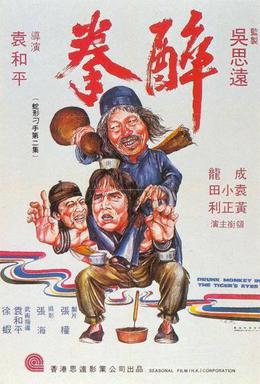
Drunken Master: How Yuen Woo-ping Blended Comedy and Brutal Kung Fu
The year 1978 delivered a cinematic punch that redefined an entire genre. For many, the first encounter with Drunken Master (original title: 醉拳) was nothing short of revolutionary. Imagine a young, seemingly clumsy protagonist, Jackie Chan, flailing around like a drunkard, yet delivering devastating blows that dismantle his opponents with elegant ferocity. This wasn't just another martial arts film; it was a groundbreaking fusion of slapstick comedy and brutal, precise kung fu, orchestrated by the visionary director Yuen Woo-ping. While known by its evocative English title, in German-speaking regions, it gained notoriety as Sie Nannten Ihn Knochenbrecher – a title that, despite its somewhat melodramatic directness, certainly captured the bone-shattering impact of its fight sequences, even if it missed the comedic nuance.
Drunken Master didn't just entertain; it carved a new path for martial arts cinema, elevating physical comedy to an art form while maintaining the integrity and intensity of traditional kung fu. It catapulted Jackie Chan into superstardom and solidified Yuen Woo-ping’s reputation as a master choreographer and director, a legacy that continues to influence filmmakers worldwide.
The Genesis of a Genre-Bending Masterpiece
Yuen Woo-ping wasn't just a director; he was a scion of a martial arts dynasty. His father, Yuen Siu-tien, a legendary kung fu actor and choreographer, famously portrayed Beggar So in Drunken Master. This deep-rooted understanding of martial arts, combined with Yuen Woo-ping's innovative vision, allowed him to break free from the often stoic and rigid conventions of earlier kung fu films. He saw the potential to inject humor and fluid, almost dance-like movements into fight choreography, creating a dynamic energy that felt fresh and exhilarating.
Before Drunken Master, many martial arts films relied on dramatic posing and exaggerated impacts. Yuen Woo-ping, however, sought to create continuous, flowing action sequences that told a story within the fight itself. He understood that comedy wasn't just about punchlines; it could be physical, situational, and even emerge from unexpected character interactions during combat. This blend was crucial for the film's success and its lasting appeal. It laid the groundwork for what would become Jackie Chan’s signature style, emphasizing acrobatic stunts, comedic timing, and improvisational genius within meticulously choreographed brawls. For more on the film's impact on its star, check out Jackie Chan's Breakthrough: Drunken Master's Revolutionary Impact.
Wong Fei-hung's Unconventional Path to Mastery
The heart of Drunken Master lies in its engaging narrative – a classic "hero's journey" with a comedic twist. We meet Wong Fei-hung (Jackie Chan), a headstrong, disrespectful youth who constantly embarrasses his father, the esteemed master Wong Kei-ying. To instill discipline and respect, Wong Kei-ying sends his son to train under the notorious Beggar So (Yuen Siu-tien), a seemingly eccentric and cruel master of the "Drunken Boxing" style.
Beggar So's training methods are anything but conventional. They are brutal, bizarre, and often hilarious. Wong is subjected to excruciating physical challenges: carrying heavy water jugs for hours, balancing on precarious poles, and enduring endless beatings. These rigorous training montages, which could have been tedious, become captivating mini-dramas thanks to Yuen Woo-ping's choreography and Jackie Chan's expressive performance. They are a masterclass in combining slapstick pain with genuine skill development. Through this ordeal, Wong Fei-hung gradually learns that true strength isn't born from aggression but from rigorous discipline, unwavering perseverance, and self-control – lessons delivered with a surprising amount of philosophical depth wrapped in comedic packaging.
The film's plot thickens with the arrival of the deadly assassin Thunderfoot (Hwang Jang-lee), a ruthless killer known for his signature "devil's kick" and for having defeated multiple masters. This formidable antagonist provides the ultimate test for Wong Fei-hung's newly acquired, yet still developing, skills. The stage is set for a thrilling showdown where two vastly different fighting philosophies collide.
Choreographic Brilliance: Blending Laughter and Lethality
What truly sets Drunken Master apart is its iconic fighting style: Drunken Boxing (醉拳, Zui Quan). Inspired by the Eight Drunken Immortals of Chinese mythology, each variant of the style mimics a different state of intoxication, from staggering and swaying to sudden, explosive bursts of power. Yuen Woo-ping meticulously choreographed these movements, making them appear chaotic and unpredictable, yet incredibly effective. Wong Fei-hung's movements are loose, fluid, and deceptive, allowing him to evade attacks and strike with surprising force when his opponents least expect it.
The training sequences are not merely exposition; they are dynamic mini-fights, showcasing the evolution of Wong's skills with humor. The climax, the battle against Thunderfoot, is a cinematic masterpiece. Thunderfoot's style is precise, powerful, and utterly lethal, a stark contrast to Wong's seemingly erratic Drunken Boxing. This clash of styles creates a spectacular visual feast – every kick, every block, every feint is executed with incredible skill and timing. The film expertly balances the comedic elements of Wong's drunken antics with the very real danger posed by Thunderfoot, making the stakes feel genuinely high.
Practical Insight: For aspiring martial artists or filmmakers, Drunken Master offers a valuable lesson: effective fighting isn't just about strength; it's about adaptability, timing, and using your opponent's expectations against them. The film teaches us that sometimes, the most unpredictable path is the most effective.
Legacy and Cultural Footprint
Drunken Master’s impact reverberated far beyond the martial arts genre. It introduced a new paradigm for action choreography, influencing countless films and choreographers. Jackie Chan, who had previously struggled to find his unique niche, found his voice and his comedic timing, setting him on a path to international superstardom. His blend of death-defying stunts, physical comedy, and martial arts prowess became a global phenomenon, and Drunken Master was arguably the film that cemented his signature style.
The film's cultural resonance is broad. Even its German title, Sie Nannten Ihn Knochenbrecher, has taken on a life of its own. Decades later, this title was famously sampled and referenced in German hip-hop, most notably by the rapper Bushido and later by Asche, highlighting how deep this film burrowed into the pop culture consciousness. The raw, impactful phrase, regardless of its original cinematic context, evoked a sense of unfiltered aggression and challenge, becoming an anthem for a new generation. To delve deeper into this interesting cultural phenomenon, you can read more here: Knochenbrecher: From 1978 Kung Fu Cult Classic to German Rap Album.
Yuen Woo-ping continued to shape martial arts cinema, lending his choreographic genius to Hollywood blockbusters like The Matrix and Crouching Tiger, Hidden Dragon, but it was Drunken Master that showcased his groundbreaking vision early on. It proved that martial arts films could be intelligent, funny, and incredibly thrilling all at once, without sacrificing the integrity of the fight sequences.
Conclusion
Drunken Master remains a timeless classic, a vibrant testament to the genius of Yuen Woo-ping and the burgeoning star power of Jackie Chan. It masterfully fused the brutal elegance of kung fu with uproarious physical comedy, creating a cinematic experience that was both viscerally exciting and genuinely funny. From Wong Fei-hung’s arduous training under Beggar So to the unforgettable final showdown with Thunderfoot, every frame crackles with innovation and entertainment. Its influence on filmmaking, its cultural footprint, and its enduring appeal demonstrate that a truly original vision, like the unpredictable movements of Drunken Boxing, can shatter expectations and leave an indelible mark on cinematic history.